
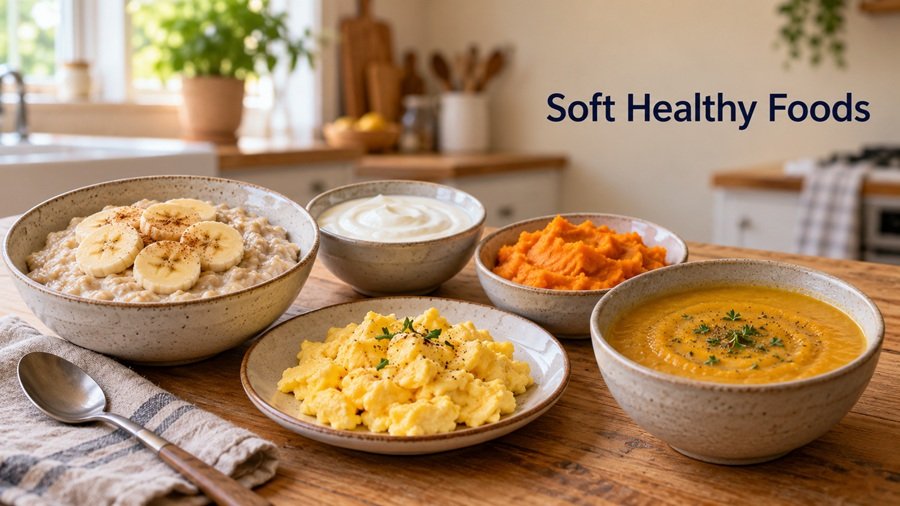
Soft Healthy Foods: Easy Ideas for Balanced Meals
Soft Healthy Foods can help when chewing is uncomfortable or you have been advised to eat foods that are softer to chew. Suitable options can include soft eggs and oatmeal, yogurt, tender fish, mashed vegetables and ripe fruit. The best choices will vary depending on your needs and any instructions you have been given by a healthcare professional.
A soft diet is not a specific set of foods; some people need to follow a soft texture for a short time due to dental problems or surgery, whereas others may have more long-term needs. If you have been prescribed a particular texture for food or drink, it is important to stick to these guidelines. “Soft” foods are not always appropriate for everybody’s needs.
What Are Soft Healthy Foods?
Soft foods are generally those that are tender or moist. They may be naturally soft, like yogurt or ripe banana, or cooked or prepared to a softer consistency. NHS guidance refers to soft, bite-sized food as moist and tender, and lists requirements for certain people.
A “soft” diet and a “bland” diet are not the same thing; a bland diet is a different type of restricted eating plan, often prescribed to people with particular medical conditions. Always ask your clinician if you are unsure which instructions to follow.
Healthy Soft Foods by Food Group
| Food group | Soft options |
|---|---|
| Protein | Scrambled or soft-boiled eggs, flaky fish, tender minced meat, tofu, well-cooked lentils |
| Grains and starches | Oatmeal, soft rice, pasta cooked until tender, mashed potato |
| Fruits | Ripe banana, applesauce, stewed fruit, soft canned fruit |
| Vegetables | Well-cooked carrots, pumpkin, squash, spinach or peeled potato |
| Dairy and alternatives | Yogurt, cottage cheese, soft cheese, milk or fortified alternatives |
Choose the foods that are appropriate to your needs, for example if dairy is a problem or you have to restrict certain foods for a medical reason.
Nutritious Soft Food Ideas
Protein-Rich Choices
Eggs can be simple to prepare with a soft consistency. Try scrambled eggs or a soft omelet, well-cooked. Flaky fish can also be baked or steamed and served with a soft side such as mashed potato.
Other options could include soft tofu, cottage cheese and well-cooked lentils. Well-cooked minced chicken or meat can also be suitable, as long as it has been cooked in enough moisture. MedlinePlus lists eggs, tofu and tender poultry or fish as suitable foods for a bland diet, but individual guidance can vary.
Make It Easier to Eat Protein-Rich Meals
Keep foods moist by using a sauce, gravy or broth if possible. Always cook meats until tender and remove bones, tough pieces and gristle. If you have swallowing difficulties, speak to a speech and language therapist or dietitian about whether the texture is appropriate for you.
Soft Fruits and Vegetables
Soft fruits and vegetables can give a good range of nutrients. They can include ripe banana, applesauce, stewed fruit, mashed pumpkin and well-cooked vegetables. Always peel fruits and vegetables if their skin is too firm for you.
Cook vegetables until they are tender, then mash or finely chop as necessary. It can be a mistake to assume that raw fruits and vegetables will not cause a problem just because they are soft, as skins and stringy parts can still be difficult.
Gentle Grains and Starches
Oatmeal, soft rice, well cooked pasta and mashed potato can be good bases for meals. Cook them as desired; add liquid such as milk, broth, gravy or a suitable sauce if allowed by your dietary guidelines to avoid them being too dry.
Whole grains can be nutritious but the texture can be difficult for some people and whether they are suitable for a soft diet depends on why you are following it.
Simple Soft Healthy Meal Ideas
Some meals can be made up of just a few items:
- Breakfast: Oatmeal (cooked in milk or a suitable alternative) with mashed ripe banana
- Lunch: Soft scrambled eggs with mashed potato and well-cooked vegetables
- Dinner: Flaky fish with soft rice and well-cooked carrots
- Snack: Yogurt, cottage cheese or applesauce (depending on your needs)
- Vegetarian meal: Soft tofu or well-cooked lentils with mashed pumpkin
These are general ideas, not a recommended meal plan, and portion sizes and foods should be chosen to suit your personal needs and any guidance you are given.
Foods That May Be Hard to Manage
You may need to avoid foods that are hard, dry, stringy, chewy or crunchy. Some examples are raw carrots, nuts, tough meat, crusty bread, popcorn and dried fruit. NHS texture guidance also includes dry or mixed-texture foods as unsuitable for some people who have been prescribed a certain soft-food type.
Do not rely on a generic online list for your needs and remember that a person recovering from dental surgery will have different needs to somebody with a swallowing disorder.
Tips for Preparing Soft Foods
- Cook vegetables until tender, then mash or chop.
- Add suitable liquid or sauce to reduce dryness.
- Remove any bones, skins, seeds or tough pieces that are required.
- Eat slower and take smaller bites.
- Have variety to include different food groups.
- Follow any instructions for a suitable food texture for foods and drinks prescribed for you.
If you have a condition that means you have swallowing difficulties, always consult your healthcare team before making changes to your food textures or trying to thicken your drinks, as the right consistency can vary between individuals.
Frequently Asked Questions
What Are Examples of Soft Healthy Foods?
Examples include eggs, oatmeal, yogurt, flaky fish, tofu, mashed vegetables, ripe banana and soft rice. Always choose the foods that are right for you.
Are Soft Foods Always Easy to Swallow?
No, a food that seems soft may not be safe for somebody with swallowing difficulties. Always follow any guidance from a speech and language therapist or clinician about the texture of your food.
Can I Eat Vegetables on a Soft Diet?
Yes, if possible, cook them until tender and mash or chop as needed. The appropriate texture depends on the reason you are following a soft diet and any guidance you have been given.
Is a Soft Diet the Same as a Bland Diet?
No, a “soft diet” is not the same as a “bland diet”. “Soft” is about texture and “bland” is a different type of restricted eating plan, usually to avoid spicy or high-fibre foods if you have a medical condition.
How Can I Make My Soft Meals Healthier?
Try to include a protein food, a soft grain or starch and suitable fruit or vegetables. A dietitian can help you to create balanced meals.
Conclusion
Soft Healthy Foods can include protein, grains, fruits and vegetables prepared to a simple texture that is easy to chew. Eggs, oatmeal, tender fish, yogurt, mashed vegetables and ripe fruit are all useful foods to include. If you have a condition that means you have a soft diet, always follow your healthcare team’s guidance.