
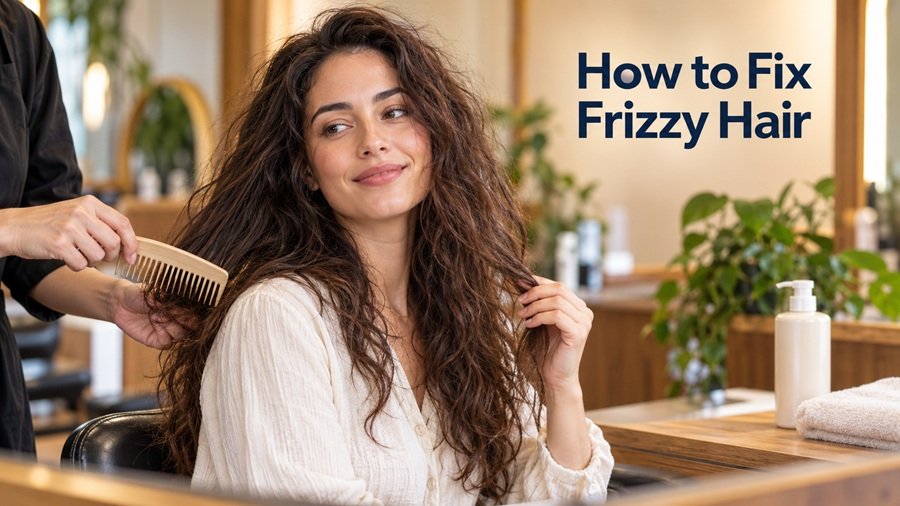
How to Fix Frizzy Hair: Simple Tips for Smoother Strands
If you are wondering How to Fix Frizzy Hair start with gentle care and plenty of conditioning. Frizzy hair can be more obvious when hair is dry, damaged, curly or exposed to humidity. A routine that matches your hair type can help smooth hair and reduce breakage though existing damage may not be reversible.
What Causes Frizzy Hair?
Frizzy hair can have causes. Dryness, frequent heat styling, chemical treatments, and rough handling can leave hair more prone to looking brittle or flyaway. Curly and textured hair can also need conditioning to stay manageable.
Humidity may also affect how frizzy hair looks and behaves. Since hair types differ, a product that smooths one person’s hair might feel heavy or greasy on another person.
How to Fix Frizzy Hair with a Gentle Routine
Use Shampoo and Conditioner That Suit Your Hair
Apply shampoo to your scalp then let the suds rinse through the lengths. Follow with conditioner. If your hair is straight focus conditioner on the ends; if your hair is dry or curly you may find it helpful to condition more of the hair’s length.
Choose products based on how frizzy hair feels than assuming that the most expensive product will work best. If frizzy hair feels weighed down try using conditioner or applying it only from the middle of frizzy hair to the ends.
Try a Leave-In Conditioner
A leave‑in conditioner may help reduce hair and make hair easier to detangle. Apply an amount to damp hair concentrating on dry or frizzy areas rather than the scalp. Use a product if frizzy hair is fine and follow the product directions. Some leave‑in conditioners also provide heat protection. Check the label to make sure.
Apply It Without Weighing Hair Down
Start with an amount and add more only if needed. Work it through hair with your hands or a wide‑tooth comb. Using much can leave frizzy hair looking greasy or flat.
Dry and Detangle Hair
Wet frizzy hair can be more vulnerable to breakage so handle it gently. Of rubbing it with a towel wrap it in a towel or soft T‑shirt to absorb moisture. Detangle gradually starting at the ends and working upward. Dermatologists recommend a comb for many hair types; people with thick curly hair may find it easier to detangle while conditioner is still in their hair.
Use Heat
Frequent use of blow dryers, flat irons and curling irons can contribute to frizzy hair damage. When possible let frizzy hair partially air‑dry first. If you use a tool choose a low or medium setting and use a product labelled as a heat protectant.
Adjust Your Routine to Your Hair Type
For Coily Hair
Curly hair may need more conditioning. Use conditioner along the length of hair and try a leave‑in conditioner or oil if frizzy hair remains dry. Detangle gently with your fingers or a wide‑tooth comb preferably when frizzy hair is wet and conditioned. Avoid brushing curls when dry if it causes tangles, frizzy hair or breakage.
For Fine or Straight Hair
Use conditioners and styling products applying them mainly to the mid‑lengths and ends of frizzy hair. Start with an amount of leave‑in product so frizzy hair does not feel coated or lose volume.
Can You Repair Frizzy, Damaged Hair?
Conditioners and styling products can make frizzy hair feel smoother and easier to manage. They cannot permanently repair damage to the hair strand. Reducing heat, rough brushing and harsh styling can help limit damage as new frizzy hair grows.
If you have split ends, a trim may make the ends of hair look neater. If you continue to have breakage or frizzy hair becomes difficult to manage despite changing your routine a dermatologist can help assess your hair and scalp.
Frequently Asked Questions
1. How can I fix hair quickly?
Apply a small amount of leave‑in conditioner to damp frizzy hair and smooth it through the frizzy sections. Avoid using much especially if frizzy hair is fine.
2. Does conditioner help, with hair?
Conditioner can. Detangle frizzy hair, helping frizzy hair feel smoother and easier to manage. Choose a formula that suits hair type.
3. Should I brush hair when it is wet or dry?
It depends on hair type. Use detangling and a wide‑tooth comb; curly or coily frizzy hair may be easier to detangle while wet and conditioned.
4. Can heat styling make hair frizzier?
Using heat often or too hot can hurt hair and make hair look brittle or frizzy. Cut back on heat styling choose a heat setting and put on a heat protectant that is labelled.
5. When should I see a dermatologist about hair?
Think about visiting a dermatologist if hair keeps breaking if hair texture changes suddenly if you notice scalp problems or if hair stays hard to manage with gentle care.
Conclusion
The way to keep frizzy hair under control is to condition hair often treat hair gently and avoid too much heat. A leave‑in conditioner can help,. The best routine depends on hair type. If hair breakage or scalp problems keep happening talk to a dermatologist, for help.